





Data presented at the North American Veterinary Dermatology Forum (NAVDF) demonstrated greater than 80% reduction in pruritus sustained through one year following an initial three-dose induction regimen and a single six-month booster, with antipruritic activity comparable to lokivetmab.
- In a head-to-head canine IL-31 challenge study, AKS-699 demonstrated pruritus control comparable to lokivetmab while requiring substantially fewer treatments over the study period.
- AKS-699 induced robust, sustained anti-IL-31 antibodies maintained for more than one year with an initial three-dose regimen and a single six-month booster.
- AKS-699 was well tolerated over the full study duration with no clinically meaningful adverse findings.
…………………………………………………………….
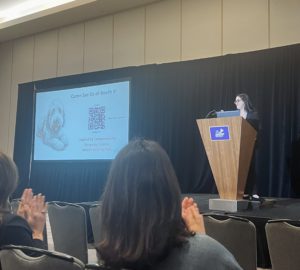
BEVERLY, Mass. (June 16, 2026) | PRNewswire — Akston, the Biotech Built for Pets, today announced preclinical results from a head-to-head study evaluating AKS-699, the company’s Fc-fusion immunotherapeutic targeting interleukin-31 (IL-31), against lokivetmab (marketed as Cytopoint® by Zoetis) in a canine IL-31-induced pruritus model. The data, presented at the North American Veterinary Dermatology Forum (NAVDF) Annual Conference in Indianapolis, by Andrea Delpero, Senior Manager – Pharmacology, at Akston, showed durable control of IL-31 challenge associated pruritus comparable to that of lokivetmab with substantially reduced dosing frequency.
Todd Zion, PhD, co-founder and CEO of Akston commented, “For pet parents managing their dog’s atopic dermatitis, the treatment burden is real; requiring frequent, routine, monthly visits and recurring costs. The treatment challenge for canine atopic dermatitis has always been treatment consistency and long-term compliance. These data suggest AKS-699 could meaningfully change that equation with the potential to reduce injections to twice yearly or less while maintaining the level of itch control that veterinarians and pet parents depend on. This is also an important validation point for the Ambifect® platform, which is now generating head-to-head data across multiple therapeutic areas.”
Tom Lancaster, PhD, co-founder and CSO of Akston added, “These results are particularly encouraging because AKS-699 induces a sustained endogenous immune response against IL-31 without delivering an exogenous antibody. Achieving pruritus control comparable to lokivetmab for up to a year in an industry-accepted IL-31 challenge model supports the underlying mechanism of action. The favorable safety profile observed throughout the study further supports advancing AKS-699 into client-owned dogs.”
Canine atopic dermatitis: affects approximately 10–15% of the dog population and is one of the most common conditions seen in veterinary dermatology practice. IL-31 is a key pruritogenic cytokine that drives the itch associated with the disease, and neutralization of IL-31 is a clinically validated therapeutic approach. lokivetmab, the current approved therapy targeting this pathway, requires repeat monthly injections—a regimen that can be cost-prohibitive for many pet owners and a barrier to sustained compliance.
AKS-699 is built on Akston’s proprietary Ambifect® Fc-fusion protein platform, which leverages the patient’s own immune system to generate endogenous polyclonal antibodies against a disease target. Rather than delivering an exogenous monoclonal antibody that requires frequent re-dosing, AKS-699 is formulated with an adjuvant and administered intramuscularly to induce the animal’s own sustained antibody production against IL-31. Because the immune response scales with the animal’s size, AKS-699 uses a fixed dose rather than weight-based dosing.
Key Findings
Sustained Anti-IL-31 Antibody Response: AKS-699 induced a robust anti-IL-31 antibody response with titers rising rapidly following the initial three-dose regimen and sustaining over one year. The response was boostable with antibody levels increasing following six-month and twelve-month booster administrations.
Durable Pruritus Control: Both AKS-699 and lokivetmab produced rapid, marked reductions in cIL-31 challenge-induced pruritus compared to vehicle control. AKS-699 maintained greater than 80% reduction in pruritic events throughout the study, including approximately 180 days following the booster dose. The magnitude and durability of the antipruritic effect with AKS-699 was comparable to that of lokivetmab. Notably, this level of control was achieved with an initial three-dose regimen and a single six-month booster, compared to the monthly dosing schedule established for lokivetmab.
Favorable Safety Profile: AKS-699 was well tolerated over the full duration of the study. Mild injection-site reactions were observed in some dogs in both the AKS-699 and lokivetmab groups; all reactions were mild, required no intervention, and resolved within one to three days. Booster injections were equally well tolerated. Clinical observations and pathology parameters were unremarkable, and no clinically meaningful changes in body weight were observed.
Potential Clinical Impact
The results suggest that AKS-699 has the potential to expand treatment options for canine atopic dermatitis by providing durable control of IL-31-mediated pruritus with substantially reduced dosing frequency. An extended dosing interval of approximately six months—with the possibility of annual boosters—could meaningfully lower overall treatment costs, reduce the burden of repeat veterinary visits, and improve owner compliance. Fixed-dose administration, enabled by the immune system’s natural scaling with animal size, further simplifies treatment logistics compared to weight-based dosing regimens.
Next Steps
Akston plans to advance AKS-699 into evaluation in client-owned dogs to expand the safety and efficacy dataset, including assessment in dogs with naturally occurring atopic dermatitis. The company will further characterize the duration of response and investigate the feasibility of annual booster administration. The company’s new state-of-the-art biologics manufacturing facility in Louisiana will support clinical supply and commercial-scale production.
About Akston
Akston is a biotech company built for pets. Using our proprietary Fc-fusion protein platform, we develop immuno-enhancing and targeted protein treatments that aim to reduce treatment frequency while enhancing efficacy. Backed by a vertically integrated structure and state-of-the-art biologics facilities, we accelerate development from discovery to commercial manufacturing – ensuring innovation reaches veterinarians and the pets we love faster and more efficiently. Learn more at www.akston.com.
AKS-699 is an investigational therapeutic and is not approved for commercial use.
———————————————–
Media Contact:
Anshul Krishnan
anshul.krishnan@akstonbio.com
SOURCE Akston Biosciences Corporation